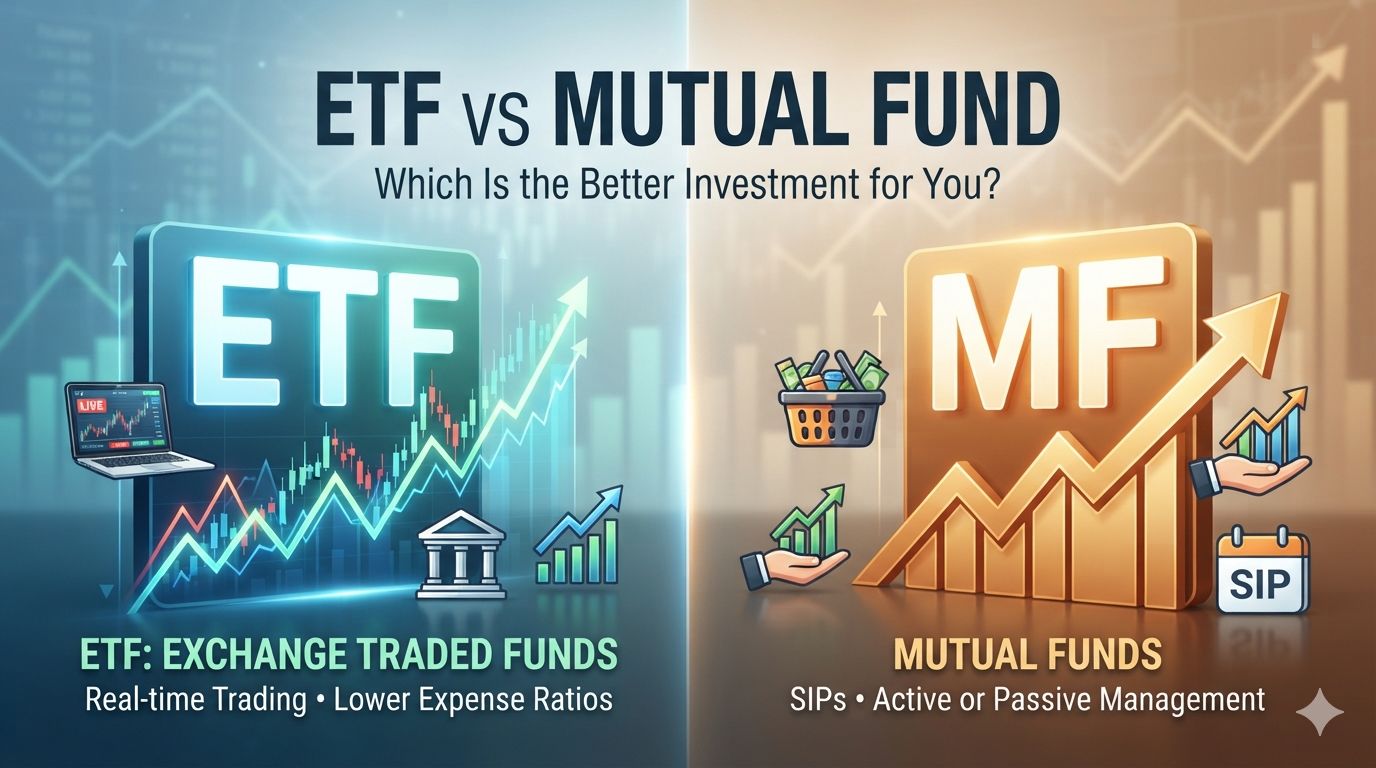
ETF vs Mutual Fund: Which Is the Better Investment for You?
Both ETFs (Exchange Traded Funds) and mutual funds are popular investment vehicles in India — but they work very differently !!
ETF vs Mutual Fund: Which Should You Choose?
The ETF vs mutual fund debate is one every Indian investor eventually faces. Both pool your money into a basket of stocks or bonds, but they differ in how you buy them, what they cost, and how much effort they need. Here's a quick, practical comparison to help you choose.
How They Work - ETF v/s Mutual Fund
Feature | Mutual Fund | ETF |
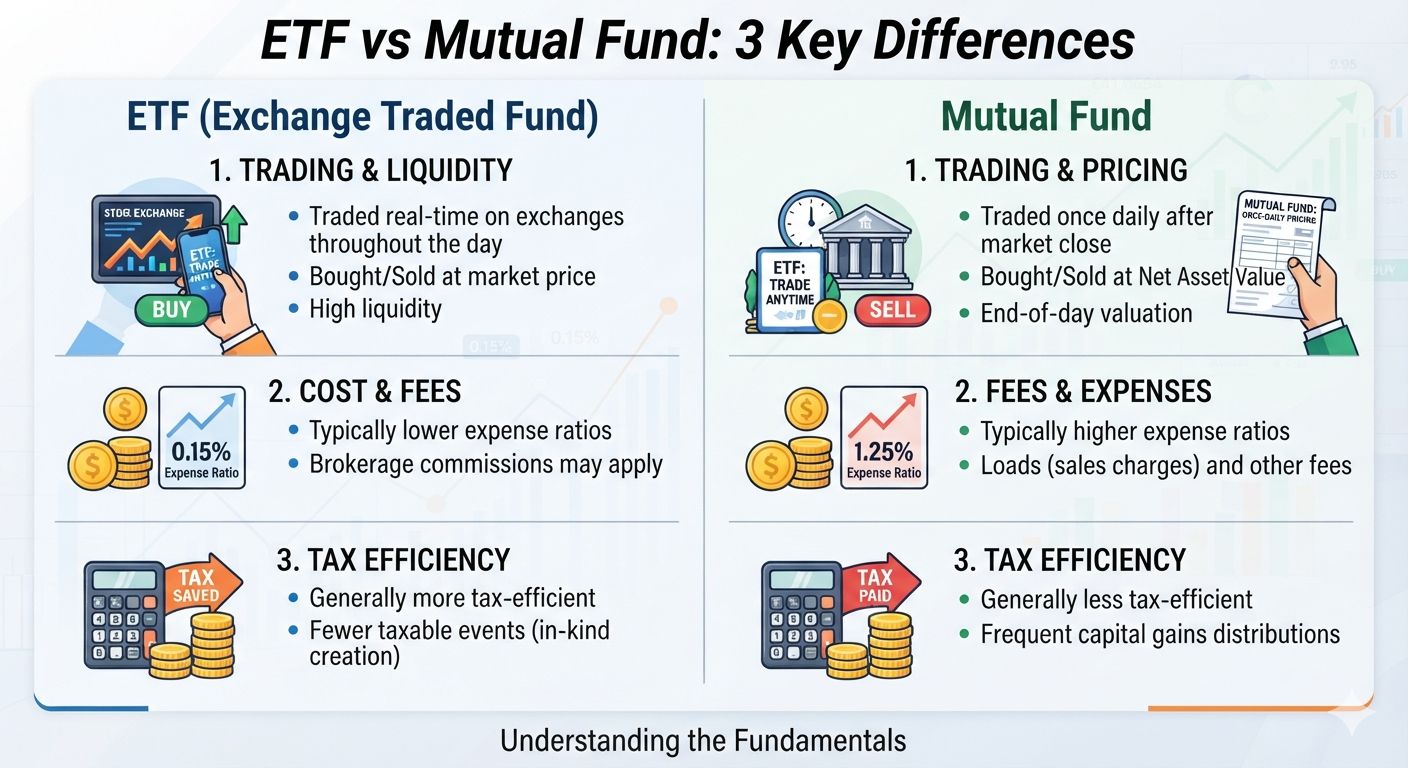
Buying process | Order placed before cut-off; priced at end-of-day NAV | Traded live on the stock exchange, like a share |
Account needed | None — no demat required | Demat + brokerage account required |
Pricing | Fixed once a day | Changes every second in market hours |
Management | Active or passive | Always passive — tracks an index or commodity |
Because ETFs are always passive while mutual funds can be active or passive, this difference in management style is what mainly drives their cost gap.
Cost Comparison

A direct plan mutual fund costs about half of a regular plan, while an ETF's expense ratio is usually the lowest of all. But ETFs also add brokerage and STT on every trade, so for regular SIP investors, a direct index fund often works out cheaper overall. Large, one-time investments are where ETFs tend to save more.
The Hidden ETF Risk: Price vs NAV
Mutual fund units are always bought at the official NAV — no premium, no discount. An ETF's market price, however, can trade above or below its real value depending on demand. Paying even a 1% premium is an invisible loss on day one, so always check the live iNAV before placing an ETF order.
Quick Verdict: Who Should Choose What ETF v/s Mutual Fund
| Choose ETF If You... | Choose Mutual Fund If You... |
Experience | Understand stock market mechanics | Are new to investing |
Effort | Can monitor price vs NAV | Want a fully automated SIP |
Investment size | Invest large, occasional lump sums | Invest smaller, regular amounts |
The Bottom Line
For most retail investors in India, a direct plan index mutual fund via SIP remains the simplest starting point. Once your investment size grows and you're comfortable tracking NAV premiums, ETFs can be added as a complementary tool — not a replacement.
The bottom line: ETFs are not better than mutual funds. They are simply a different tool, for a different investor, at a different stage of the investment journey.
The One Rule to Remember
Beginners: Start with mutual fund SIPs. Keep it simple, keep it automatic, keep investing. When your wealth grows and your knowledge deepens, ETFs will still be there — and you will be far better equipped to use them correctly.
Disclaimer
This article is intended for general educational purposes only and does not constitute financial, investment, or tax advice. Mutual fund and ETF investments are subject to market risks. Please read all scheme-related documents carefully and consult a SEBI-registered investment advisor before making financial decisions.

CFA, MBA and former corporate CFO with 18 years of global financial experience across the US, UK and India. Sasikumar writes jargon-free, actionable guides on mutual funds, ETFs and retirement planning for Indian investors.