Step by Step Guide to Building a High-Performing ETF Investment Portfolio
Mastering strategic asset allocation, core-satellite structuring, and systematic entry rules for wealth creation.
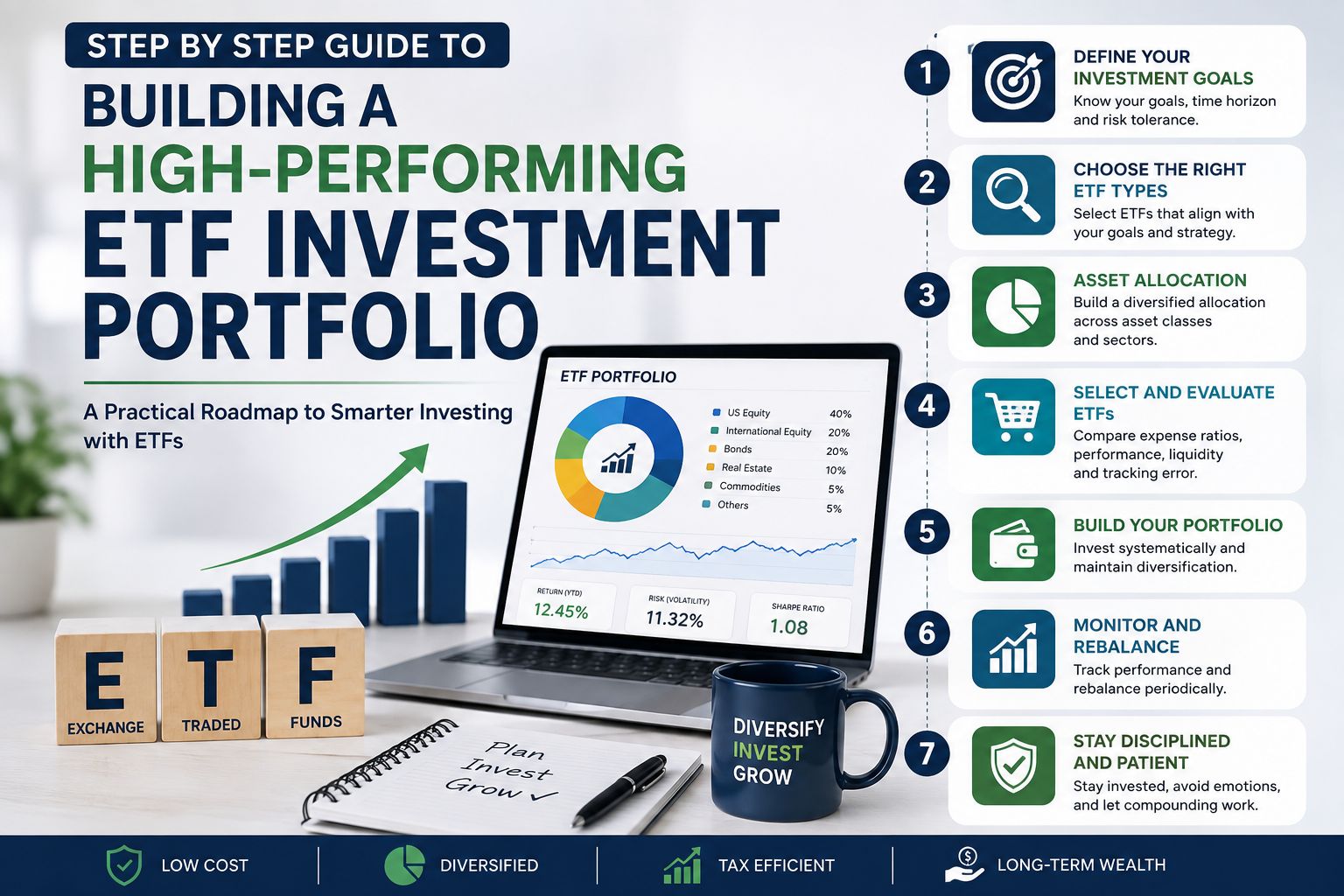
Step-by-Step Guide to Building an Investment Portfolio in ETFs
Mastering strategic asset allocation, core-satellite structuring, and systematic entry rules for wealth creation.
When most people imagine a successful investor, they picture someone picking individual stocks or trading volatile options. However, financial data reveals that true high net worth stems from primary residences and structured, long-term retirement accounts.
Mastering investment portfolio construction is essential for predictable wealth accumulation. Creating a strong, resilient foundation allows your capital to compound consistently across changing market conditions.
Why Exchange-Traded Funds (ETFs) Are Essential Building Blocks
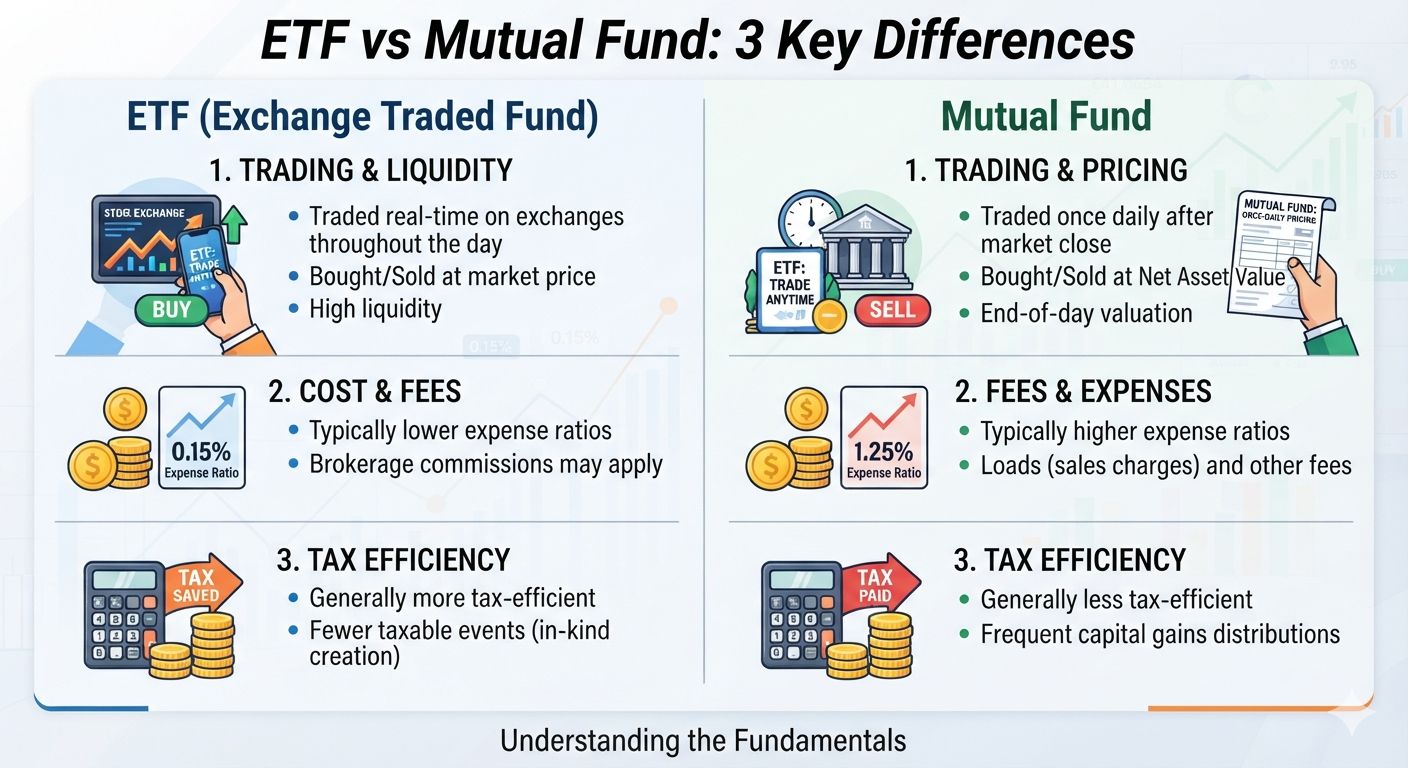
While traditional mutual funds remain popular, modern investors leverage ETF portfolio strategy frameworks due to clear structural advantages:
Broad Diversification: Single ETFs house baskets of underlying securities, mitigating individual stock risk.
Low Cost Structure: Passively managed ETFs carry lower expense ratios than actively managed funds.
High Transparency: Holdings are disclosed daily and traded continuously throughout market hours.
Comprehensive Market Coverage: ETFs cover equities, factor strategies (momentum, value), commodities, and debt instruments.
Step 1: Define Clear Investment Goals
A portfolio should never be a random collection of financial assets. It must function as an integrated wealth engine designed to meet specific long-term milestones.
The Three-Part Goal Framework
Identify Purpose: Specify exact targets such as retirement, higher education, or emergency reserves.
Match Strategy: Align short-term liquidity needs with capital preservation and long-term targets with capital growth.
Establish Operational Workflow: Set fixed savings targets, write down short/long-term targets, and review periodically.
For example, reallocating low-yielding fixed income capital (yielding ~7.7%) into equity-based index ETFs over a ten-year horizon increased returns to 13.6%, demonstrating the value of proper target alignment.
Step 2: Implement Strategic Asset Allocation
Executing a sound asset allocation strategy involves dividing capital across equities, debt, gold, real estate, and cash based on timeline and risk appetite.
The Safety Cushion Approach
Rather than relying on rigid formulas like the '100 Minus Age' rule, use the safety cushion investment method. Secure a fixed, absolute emergency fund for near-term needs, and deploy remaining capital into growth assets.
This optimizes your risk adjusted return optimization by ensuring capital generates higher yields for identical risk exposure.
Step 3: Establish a Core and Satellite Portfolio Structure
To balance baseline stability with tactical upside, organize your investments into a core and satellite portfolio setup.
The 80/20 Allocation Model
The Core (80% Allocation): Forms the portfolio foundation using diversified, low-cost index ETFs or large-cap funds to ensure steady market tracking.
The Satellite (20% Allocation): Targets tactical opportunities, factor strategies (momentum, quality), or emerging sectors to generate alpha.
Step 4: Security Selection via the 3x3 Selection Grid
To build a balanced value growth momentum portfolio, map holdings systematically across market capitalizations and investment styles.
The 3x3 Security Matrix
Market Cap / Style | Momentum Style | Value Style | Growth Style |
Large Cap | Nifty 200 Momentum 30 | Enhanced Value Index ETFs | Broad Large Cap Growth ETFs |
Mid Cap | Midcap Momentum Quality ETFs | Midcap Value Funds | Midcap Growth Index Funds |
Small Cap | Smallcap Momentum ETFs | Smallcap Value Funds | Smallcap Growth Funds |
Step 5: Execute Systematic Entry and Exit Rules
Eliminating emotion requires clear portfolio rebalancing rules and disciplined valuation metrics.
Fairly Valued Markets (P/E 21–24): Maintain standard automated Systematic Investment Plans (SIPs).
Undervalued Markets (P/E < 20): Supplement standard SIPs with lumpsum deployments to acquire assets cheaply.
Valuation Stretches (P/E > 26): Take partial profits when benchmark index valuations reach overbought levels.
Conclusion
Building long-term wealth requires structured asset allocation, objective security selection, and systematic execution. By following a 5-step ETF framework, investors can ensure long-term stability and compound capital efficiently.
__________________________________________________________________________________
Disclaimer
This article is provided strictly for educational and informational purposes only and does not constitute financial, legal, or investment advice. The strategies, allocation models, and index examples discussed herein represent general concepts and may not suit your individual financial situation, risk tolerance, or investment goals. Market investments are subject to market risks; review all relevant offering documents carefully before investing. Consult a certified financial planner or investment advisor prior to making financial decisions.

CFA, MBA and former corporate CFO with 18 years of global financial experience across the US, UK and India. Sasikumar writes jargon-free, actionable guides on mutual funds, ETFs and retirement planning for Indian investors.