The Ultimate Guide to Building a High-Performing Investment Portfolio
True financial success stems from building a strong, stable Investment Portfolio that grows consistently over time. Whether you are a beginner or a seasoned investor, mastering portfolio construction is essential for long-term wealth accumulation.
Step by Step Guide to Building a High-Performing Investment Portfolio in ETFs
When most people think of a 'successful investor,' they picture someone who struck it rich picking individual stocks or trading options. However, financial data reveals a different reality: for the vast majority of wealthy individuals, the primary sources of net worth are their primary residences and long-term retirement accounts.
True financial success stems from building a strong, stable Investment Portfolio that grows consistently over time. Whether you are a beginner or a seasoned investor, mastering portfolio construction is essential for long-term wealth accumulation.
Why Exchange-Traded Funds (ETFs) Are Essential Building Blocks
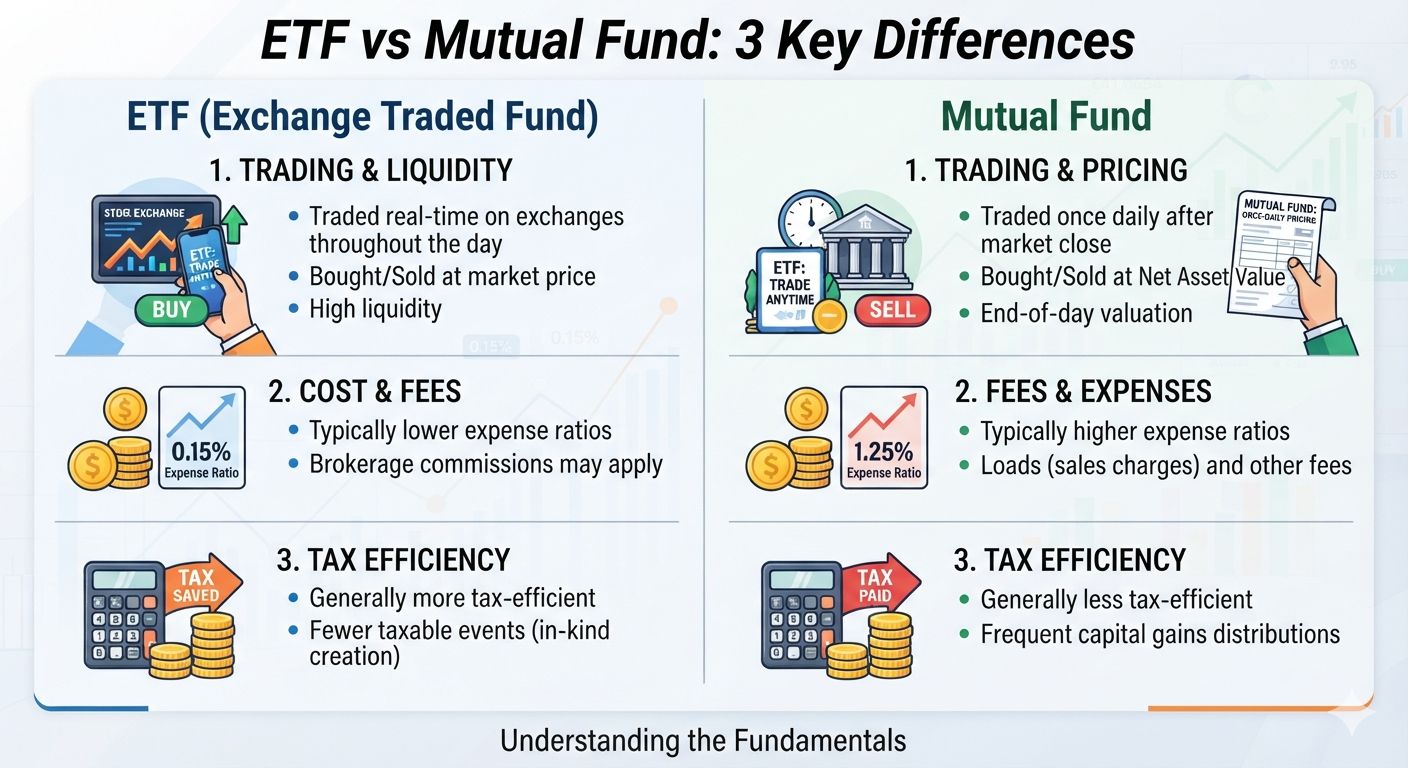
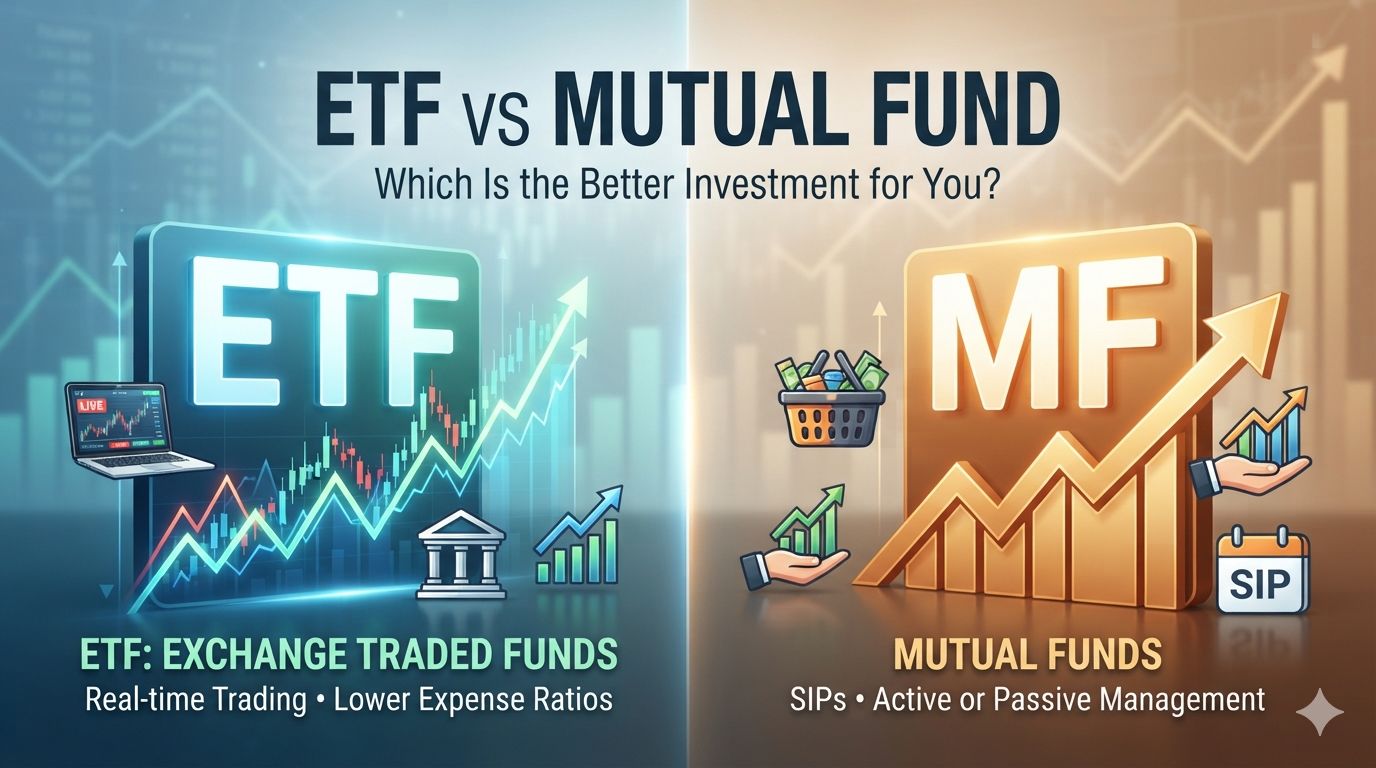
While the principles of portfolio construction apply to actively managed mutual funds and index funds, Exchange-Traded Funds (ETFs) offer distinct advantages for modern investors.
Broad Diversification: A single ETF contains a basket of individual securities, mitigating single-stock risk.
Low Cost Structure: Passively managed ETFs generally feature lower expense ratios than actively managed funds.
High Transparency: Investors can view daily holdings and trade shares throughout market hours.
Comprehensive Market Coverage: ETFs cover various market caps, sectors, factor strategies (momentum, quality, value), commodities (gold, silver), and debt instruments (corporate bonds, government securities).
Step 1: Define Clear Investment Goals
A portfolio should never be a random collection of assets. Instead, it must function as a coordinated wealth creation engine aligned with specific financial objectives.
The Three-Part Goal Framework
1. Identify the Purpose: Specify exactly what you are investing for—such as retirement, higher education, a home purchase, or an emergency fund.
2. Match the Strategy: Align each goal with a financial strategy. For instance, short-term needs require capital preservation, while long-term retirement requires a growth strategy.
3. Establish an Operational Workflow: Write down short- and long-term targets, assign fixed timelines, set annual savings goals, and review progress periodically.
Case Study: Alignment in Action |
Step 2: Implement Strategic Asset Allocation
Asset allocation involves dividing your portfolio among different asset classes—such as equities, debt, gold, real estate, and cash—based on your risk tolerance, time horizon, and goals.
Beyond Fixed Ratios: The Safety Cushion Approach
Traditional financial planning often relies on rigid formulas, such as the '100 Minus Age' rule, to dictate equity percentages. However, fixed percentages can become inefficient as total wealth grows.
Instead of keeping an arbitrary percentage in low-yielding fixed income, determine the absolute safety cushion required to cover near-term needs and emergencies. Once that fixed safety figure is secured, the remaining capital can be deployed into higher-growth, reward-bearing assets like equities and ETFs to maximize wealth accumulation.
The ultimate objective of asset allocation is not simply to lower risk, but to optimize your risk-adjusted return—generating higher performance for the same level of risk, or maintaining returns while lowering volatility.
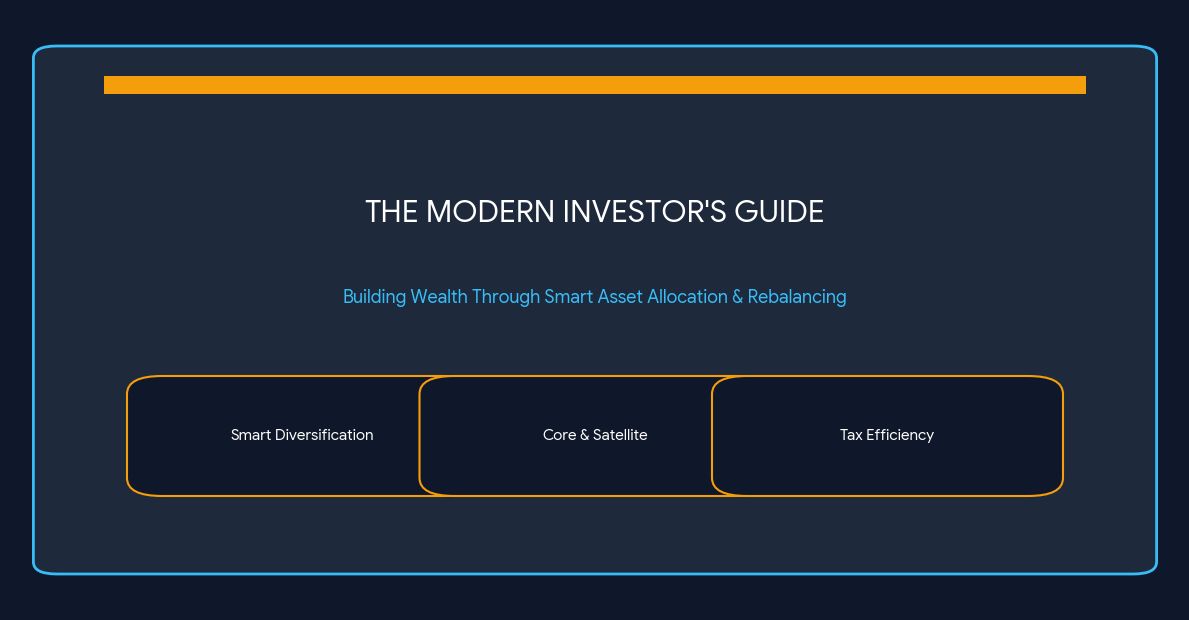
Step 3: Establish a Core and Satellite Portfolio Structure
To maintain stability while capturing market opportunities, divide your investments into a Core and Satellite framework.
The 80/20 Core-Satellite Framework
The Core (80% Allocation): Forms the foundation of your portfolio. It consists of highly diversified, low-cost instruments like broad-market index ETFs or large-cap mutual funds to provide stability, low drawdowns, and steady long-term market tracking.
The Satellite (20% Allocation): Allows for tactical, higher-risk investments designed to generate outperformance (alpha). This portion targets specific sectors, factor strategies (such as momentum or quality), emerging themes, or regional opportunities.
Step 4: Security Selection via the 3x3 Matrix
Rather than buying financial products based on historical performance alone, use a systematic 3x3 Matrix to map investments across market capitalizations and investment styles.
Market Cap / Style | Momentum Style | Value Style | Growth Style |
Large Cap | Nifty 200 Momentum 30 | Enhanced Value Index ETFs | Broad Large Cap Growth ETFs |
Mid Cap | Midcap Momentum Quality ETFs | Midcap Value Funds | Midcap Growth Index Funds |
Small Cap | Smallcap Momentum ETFs | Smallcap Value Funds | Smallcap Growth Funds |
Categorizing Your Holdings
1. Size Dimension: Categorize securities into Large Cap, Mid Cap, and Small Cap.
2. Style Dimension: Divide strategies into Growth Investing, Value Investing, and Momentum Investing.
Step 5: Execute Systematic Entry and Exit Rules
Emotion-driven trading compromises long-term returns. Implementing systematic entry and exit rules creates a disciplined, repeatable investment process.
Valuation-Based Entry Strategies
Use broad valuation metrics, such as the Price-to-Earnings (P/E) ratio of a benchmark index, to guide your deployment strategy:
Fairly Valued Markets (P/E 21–24): Maintain disciplined, automated Systematic Investment Plans (SIPs).
Undervalued Markets (P/E below 20): Supplement regular SIPs with lumpsum capital infusions to acquire assets at lower valuations.
Clear Exit Parameters
Valuation Stretches: Consider taking partial profits when index valuations reach historically overbought levels (e.g., P/E exceeding 26).
Fundamental Changes: Exit positions if the core investment thesis changes or if the fund's underlying strategy shifts away from your intended goal.
Summary Checklist for Portfolio Construction
1. Map Every Asset to a Goal: Ensure every holding serves a specific objective and timeline.
2. Secure Your Safety Cushion: Hold fixed safety assets based on absolute requirements rather than rigid percentages.
3. Maintain an 80/20 Core-Satellite Split: Anchor 80% of your capital in broad index products and reserve 20% for tactical growth.
4. Utilize a Selection Grid: Organize holdings across market caps and investment styles to avoid unintentional overlap.
5. Automate Entry and Exit Execution: Combine ongoing SIPs with valuation-driven lumpsum deployments during market pullbacks.
Disclaimer: This article is provided strictly for educational and informational purposes only and does not constitute financial, legal, or investment advice. The strategies and asset allocation models discussed herein are generic examples and may not suit your individual financial situation, risk tolerance, or investment objectives. The author is not registered with the Securities and Exchange Board of India (SEBI) or any other regulatory authority as a certified investment advisor. All data, opinions, and analysis presented are based on personal studies and perceptions at the time of writing. Market investments are subject to market risks; read all scheme-related documents carefully before investing. Consult a SEBI-registered investment advisor or qualified financial planner before making any investment decisions.